From Driveway to Doorstep: Preparing Your Home for Accessible Motoring
For many wheelchair users and disabled drivers in the UK, a great deal of thought goes into selecting the right vehicle. Ramp angles, transfer space, hand controls, and Motability allowances are all carefully weighed. Yet once that vehicle arrives on the driveway, a different set of challenges can emerge — ones rooted not in the vehicle itself, but in the domestic environment surrounding it.
A poorly designed driveway, an inaccessible garage, or the absence of a suitable charging point can significantly undermine the independence that an accessible vehicle is meant to provide. Planning your home environment with the same rigour you apply to your vehicle choice is not merely advisable; for many people, it is essential.
Rethinking the Driveway
The driveway is the first and last point of contact between your home and the road, and its design has a direct bearing on how safely and comfortably you can use your vehicle. For wheelchair-accessible vehicles — particularly those with side-entry or rear-entry ramps — the available space either side of and behind the vehicle is critical.
A standard UK driveway is typically 2.4 to 3 metres wide, which may be insufficient for a vehicle with a deployed side ramp. Ideally, a driveway accommodating a WAV should be at least 3.5 to 4 metres wide, allowing the ramp to deploy fully and giving a wheelchair user adequate room to manoeuvre without encroaching onto a lawn or flowerbed.
Surface material is equally important. Loose gravel, though popular for its drainage properties and aesthetic appeal, presents real difficulties for wheelchair users. Compacted resin-bound gravel or block paving offers a firm, level surface that supports both wheelchair movement and the stable deployment of vehicle ramps. Any gradient on the driveway should be minimal — ideally no more than 1:20 — to prevent the vehicle from rolling and to ensure ramp deployment is safe.
Lighting is another element that is frequently overlooked until it causes a problem. Sensor-activated LED lighting along the driveway perimeter significantly improves safety during early mornings or winter evenings, when visibility is reduced and the risk of misjudging a kerb or step is heightened.
Garage Accessibility: More Than Just a Door
For those who garage their vehicle, standard garage dimensions can present significant limitations. A typical single garage in the UK measures approximately 5.5 by 2.5 metres — barely enough to open a standard car door, let alone accommodate a wheelchair-accessible vehicle with a deployed ramp.
Where possible, a double garage or an extended single garage of at least 6 by 3.5 metres is recommended for WAV users. If a structural extension is not feasible, even removing internal storage units or reorganising the space can yield meaningful gains.
Electric garage doors, operated via a remote control or a smartphone application, remove the need to exit the vehicle in order to open the door — a practical consideration that many wheelchair users find significantly improves their daily routine. Some systems can be integrated with smart home platforms, allowing the door to open automatically as the vehicle approaches.
Internal garage lighting, wall-mounted grab rails near the vehicle transfer point, and a smooth, level floor surface all contribute to a safer and more practical space. If the garage connects directly to the house, ensuring that internal door threshold is flush and that the corridor beyond is wide enough for a wheelchair is equally worthwhile.
Electric Vehicle Charging: Planning Ahead
The transition towards electric and hybrid vehicles is well underway across the UK, and the accessible vehicle market is no exception. An increasing number of WAVs are now available in electric or plug-in hybrid configurations, and the Motability Scheme has expanded its electric vehicle offering considerably in recent years.
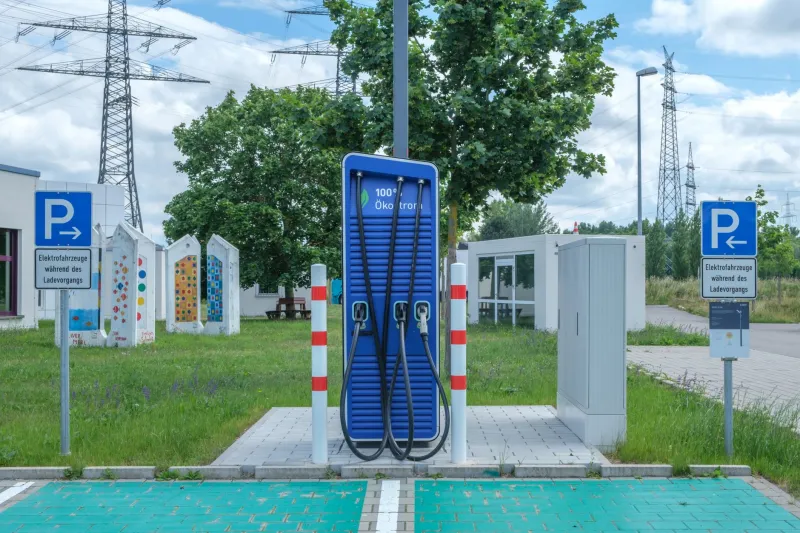
Installing a dedicated home EV charging point — commonly referred to as a smart charger or wallbox — is strongly advisable for anyone considering an electric WAV. A standard three-pin socket charges at approximately 2.3kW, which may take well over 24 hours to fully charge a larger battery. A 7kW wallbox, by contrast, can typically charge the same vehicle overnight.
The Office for Zero Emission Vehicles (OZEV) previously administered the Electric Vehicle Homecharge Scheme (EVHS), which provided grants for home charger installation. Whilst this grant is no longer available to homeowners in England, it remains accessible to flat owners and renters in certain circumstances, and separate provisions exist in Scotland and Wales. It is worth consulting your local authority and the current guidance on the GOV.UK website to establish what financial support may be available to you.
For wheelchair users, the positioning of the charging point is particularly important. The socket should be installed at a height and location that allows connection without requiring the user to reach uncomfortably or navigate obstacles. A qualified electrician with experience in accessibility adaptations will be able to advise on the optimal placement for your specific needs.
Funding Home Modifications: What Support Is Available?
Many of the adaptations described above may qualify for financial assistance through existing UK funding mechanisms. The Disabled Facilities Grant (DFG), administered by local councils in England, Wales, and Northern Ireland, provides means-tested funding of up to £30,000 in England for home adaptations that support independent living. Eligible works can include driveway improvements, garage modifications, and adaptations to facilitate vehicle access.
In Scotland, the scheme operates differently under the Care and Repair programme, and the funding thresholds and eligibility criteria vary accordingly. Occupational therapist assessments are typically required as part of the application process, and waiting times can be considerable, so early planning is strongly recommended.
Some Motability customers may also be eligible for the Specialised Vehicles Fund or other supplementary grants, particularly if their vehicle requires bespoke adaptations that interact with the home environment. Speaking with a Motability accredited dealer or an independent mobility adviser can help identify all available avenues.
Secure Storage for Mobility Equipment
Beyond the vehicle itself, many wheelchair users rely on a range of ancillary equipment — portable ramps, hoist slings, powerchair batteries, and spare components — that requires secure, accessible storage. A purpose-built garden store or a modified section of the garage can serve this function well, provided it is waterproof, lockable, and positioned close to the vehicle access point.
Some households find it beneficial to install a small covered canopy adjacent to the driveway, providing shelter during vehicle transfers in wet weather — a practical consideration that is particularly relevant given the UK's climate.
A Joined-Up Approach to Mobility
True independence for disabled drivers and wheelchair users does not begin and end with the vehicle. It extends to every aspect of the journey, including the moment you leave your front door and the moment you return. By investing in the home infrastructure that supports your accessible vehicle, you create a mobility environment that is genuinely fit for purpose — one that reduces daily friction and reinforces the freedom that accessible motoring is designed to provide.
Planning these adaptations thoughtfully, seeking professional advice early, and exploring the funding options available to you will ensure that your home and your vehicle work together as a coherent system rather than as separate, unconnected elements.