Adapting the Vehicle You Already Own: A Practical Guide to Wheelchair Lifts, Hand Controls, and UK Funding
Why Retrofitting May Be the Right Choice for You
For many wheelchair users and disabled drivers, the idea of adapting a vehicle they already own — and trust — holds considerable appeal. Perhaps your current car suits your family's needs perfectly, or you have recently acquired a disability and wish to continue driving the same model you have used for years. Whatever your circumstances, vehicle adaptation is a well-established route to maintaining mobility without the upheaval of sourcing an entirely new car.
Retrofitting is not a one-size-fits-all process, however. The right combination of adaptations depends on your specific disability, the type of vehicle you own, and how you intend to use it. Before committing to any installation, it is worth investing time in understanding what is available, what it costs, and — crucially — how to fund it.
Understanding Your Adaptation Options
The range of vehicle adaptations available in the UK is broad, covering everything from relatively minor modifications to substantial structural changes. Here is an overview of the most commonly sought adaptations:
Wheelchair Lifts and Ramps
For drivers or passengers who use a wheelchair, gaining access to a vehicle safely and independently is paramount. There are two principal solutions:
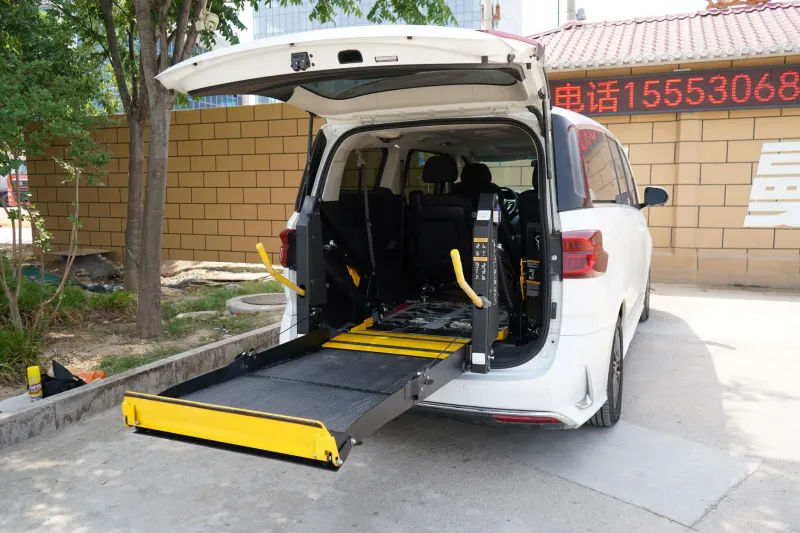
- Powered wheelchair lifts are fitted to the side or rear of a vehicle and raise or lower the wheelchair user mechanically. These are particularly suited to larger vehicles such as WAVs (Wheelchair Accessible Vehicles), MPVs, and vans. They offer the greatest ease of use, particularly for those with limited upper body strength.
- Folding or telescopic ramps provide a more cost-effective and lightweight alternative. Manual ramps require some physical effort to deploy, while powered ramp systems offer a middle ground between convenience and expense.
The suitability of each option depends on your vehicle's floor height, available door width, and whether you will be transferring to a seat or remaining in your wheelchair whilst travelling.
Hand Controls
For drivers who have limited or no use of their lower limbs, hand controls allow the acceleration and braking functions of a vehicle to be operated manually. The two most common systems are:
- Push/pull hand controls, which attach to the steering column and allow the driver to push forward to brake and pull back to accelerate.
- Electronic or servo-assisted hand controls, which require minimal physical effort and are often recommended for those with reduced grip strength or upper limb weakness.
Hand controls must be fitted by a qualified installer and should always be assessed by a specialist driving assessor beforehand to ensure they are calibrated to your individual needs.
Additional Adaptations Worth Considering
Beyond lifts and hand controls, the following adaptations are frequently requested:
- Swivel seats and transfer boards to assist with entry and exit
- Steering aids, including spinner knobs and tri-pins, for drivers with limited hand function
- Pedal guards to prevent accidental pedal use where hand controls are fitted
- Lowered floors in larger vehicles to create standing headroom for wheelchair users
Finding a Vetted Installer in the UK
Choosing the right installer is arguably the most important decision in the entire process. Poorly fitted adaptations can compromise vehicle safety, invalidate your insurance, and — in the worst cases — put lives at risk.
In the UK, the primary quality assurance body for vehicle adaptation is the MCIA (Motorcycle Industry Association) and, more specifically for this sector, the British Mobility Centres and installers registered with NAIDEX-recognised suppliers. However, the most widely respected accreditation to look for is membership of the MAES (Mobility Adaptation Equipment Suppliers) network or certification under BS AU 145 standards for wheelchair restraint systems.
The Forum of Mobility Centres (mobility-centres.org.uk) operates a network of independent assessment centres across the UK where you can receive a professional driving assessment and obtain personalised recommendations for adaptations. Many of these centres also maintain lists of approved local installers.
Always request proof of accreditation, ask to see examples of previous work, and ensure any installer provides a written guarantee for both parts and labour.
Typical Costs to Expect
Costs vary considerably depending on the complexity of the adaptation and the vehicle involved. As a general guide:
| Adaptation | Approximate Cost Range |
|---|---|
| Manual ramp (folding) | £300 – £800 |
| Powered ramp system | £1,500 – £4,000 |
| Powered wheelchair lift | £3,000 – £8,000 |
| Push/pull hand controls | £400 – £900 |
| Electronic hand controls | £1,500 – £4,500 |
| Swivel seat | £800 – £2,500 |
These figures are indicative and do not include VAT, though most disabled drivers are entitled to purchase qualifying adaptations VAT-exempt under HMRC's disability reliefs. You will need to complete a VAT relief declaration form, which your installer should be able to provide.
Accessing Grants and Funding
The cost of vehicle adaptation need not fall entirely on your shoulders. Several funding streams are available to UK residents:
Access to Work (AtW)
Administered by the Department for Work and Pensions, Access to Work is one of the most valuable — and underutilised — grants available to disabled people in employment. If you require vehicle adaptations in order to travel to and from work, or to carry out your job role, AtW can contribute towards the cost. Applications are made directly through the GOV.UK website, and grants are assessed on an individual basis.
Local Authority Funding
Many local councils in England, Wales, Scotland, and Northern Ireland operate discretionary grant schemes for disabled residents. The availability and value of these grants varies significantly by region, so it is advisable to contact your local authority's adult social care or disability services team directly. Some councils also administer Disabled Facilities Grants (DFGs), which, whilst primarily aimed at home adaptations, can occasionally be extended to vehicle modifications.
Charitable Grants
A number of UK charities offer financial assistance for vehicle adaptations. Organisations such as Motability (for eligible benefit recipients), Whizz-Kidz, Family Fund, and Snowdon Trust each have their own eligibility criteria and application processes. The website Turn2us (turn2us.org.uk) provides a useful grant search tool to identify schemes relevant to your circumstances.
VAT Relief
As mentioned above, most qualifying vehicle adaptations are zero-rated for VAT when purchased by a disabled person for personal use. This relief alone can reduce costs by 20 per cent — a meaningful saving on larger installations.
Navigating the Insurance Process
Informing your insurer of any vehicle modifications is a legal requirement, and failure to do so could render your policy void. When contacting your insurer, be prepared to provide:
- A full description of each adaptation fitted
- The name and accreditation details of the installer
- Any documentation confirming the adaptation meets relevant safety standards
In most cases, insurers treat disability-related adaptations favourably, and many will not increase your premium as a result. Specialist brokers such as Adrian Flux and Footman James have considerable experience in insuring adapted vehicles and may be better placed than mainstream providers to offer appropriate cover.
If your vehicle is financed through a hire purchase or personal contract purchase agreement, you should also notify the finance provider before proceeding with any structural modifications.
Taking the First Step
The prospect of adapting your vehicle can feel daunting, but the process becomes considerably more manageable when broken down into clear stages: assessment, adaptation selection, installer sourcing, funding application, and finally installation. Beginning with a professional driving assessment is strongly recommended, as this will provide a clear, evidence-based picture of the adaptations that will genuinely benefit you — and carry weight when applying for grants.
Retaining your independence on the road is not merely a matter of convenience; for many people, it is central to their quality of life, employment prospects, and social participation. With the right adaptations and the funding to support them, the vehicle you already own could serve you far better than you might expect.