Smarter Driving, Greater Independence: How Advanced Vehicle Technology Is Redefining Accessible Motoring
The Changing Landscape of Driver-Assistance Technology
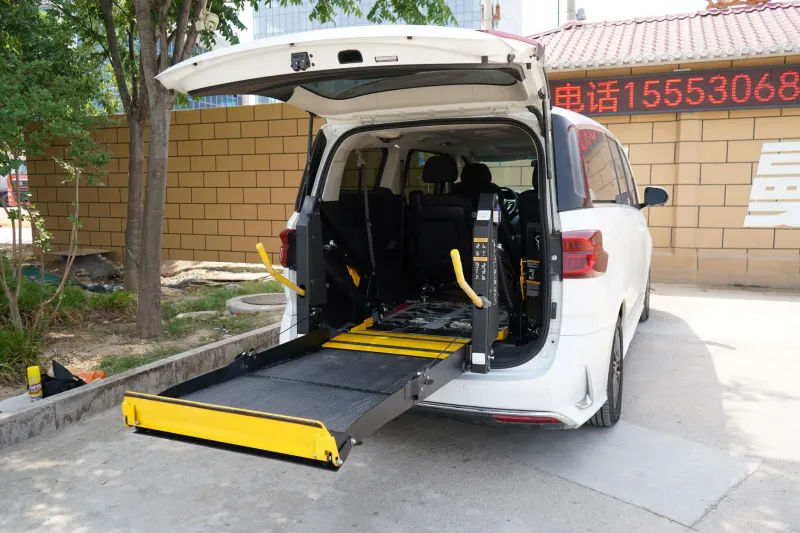
For many years, the conversation around accessible motoring focused almost exclusively on physical adaptations — hand controls, swivel seats, wheelchair hoists, and lowered floors. These remain absolutely essential, and no amount of digital innovation will diminish their importance. However, a parallel revolution in vehicle technology is quietly transforming what it means to drive with a disability or age-related condition in the United Kingdom.
Manufacturers across the industry — from mainstream brands such as Ford and Volkswagen to premium marques including BMW and Mercedes-Benz — have embedded a remarkable range of driver-assistance systems into their standard and optional equipment lists. For disabled and elderly drivers, several of these features are not merely convenient extras; they represent a meaningful difference in safety, confidence, and independence behind the wheel.
Understanding which technologies offer genuine practical benefit, and which are largely peripheral, is the first step towards selecting a vehicle that truly supports your mobility needs.
Parking Assistance: Reducing the Physical Demands of Manoeuvring
For drivers with limited upper-body mobility, restricted neck movement, or conditions affecting fine motor control, parking can represent one of the most physically demanding aspects of driving. Modern parking-assistance systems address this challenge in several complementary ways.
Rear and surround-view cameras provide a clear visual representation of the space immediately around the vehicle, reducing the need to twist the torso or crane the neck. Many current systems display dynamic guidelines that adjust in real time as the steering wheel turns, making spatial judgement considerably easier.
Ultrasonic parking sensors, now standard on a wide range of vehicles, provide audible alerts as the car approaches obstacles — a particularly valuable feature for drivers whose reaction times may be slightly extended.
Perhaps most significantly, autonomous parking systems — available on vehicles such as the Ford Puma, Volkswagen Golf, and several Hyundai and Kia models — can steer the car into a parking space with minimal driver input. The driver typically manages only the accelerator and brake, removing the complex coordination of steering whilst reversing. For someone with reduced grip strength or limited arm mobility, this capability can be genuinely transformative.
Blind-Spot Monitoring and Lane-Keeping Assistance
Checking blind spots is a routine driving task that can present real difficulties for drivers with conditions affecting head or neck movement, such as cervical spine injuries or severe arthritis. Blind-spot monitoring systems use radar sensors to detect vehicles in adjacent lanes and alert the driver — typically through a warning light in the door mirror and, in some cases, a vibration in the steering wheel or seat.
This technology does not replace the need for good observation, but it provides an additional layer of awareness that can substantially improve confidence when changing lanes on dual carriageways or motorways.
Lane-departure warning and lane-keeping assist systems serve a related purpose. If the vehicle begins to drift across lane markings without the indicators being activated, the system either alerts the driver or applies gentle corrective steering. For individuals who experience fatigue more quickly than average — a common consideration for those managing chronic conditions — this feature offers a meaningful safety margin.
Voice Controls and Infotainment Accessibility
Operating a touchscreen whilst driving requires a degree of fine motor precision and divided attention that can be genuinely hazardous for any driver, but particularly so for those with tremors, limited hand function, or conditions affecting concentration. The expansion of voice-activated controls across mainstream vehicle infotainment systems has therefore been a significant step forward.
Systems such as Apple CarPlay, Android Auto, and manufacturer-developed platforms like Mercedes-Benz's MBUX now allow drivers to adjust navigation, control media, send messages, and manage climate settings entirely through spoken commands. The quality and responsiveness of these systems has improved markedly in recent years, with natural language processing reducing the need to memorise specific command phrases.
For Motability Scheme customers in particular, it is worth noting that Apple CarPlay and Android Auto are now standard or low-cost optional features on many eligible vehicles, meaning voice-control capability need not carry a significant price premium.
Heads-Up Displays: Keeping Eyes on the Road
A heads-up display (HUD) projects key driving information — speed, navigation instructions, and safety alerts — directly onto the windscreen within the driver's natural sightline. For drivers who find it physically difficult to glance repeatedly at the instrument cluster, or who experience discomfort when shifting their gaze, a HUD can meaningfully reduce the physical effort required to remain informed whilst driving.
HUDs were once confined to premium vehicles, but they are increasingly available on mid-range models. The Mazda CX-5, Peugeot 3008, and BMW 1 Series all offer HUD functionality, and it is appearing progressively across Kia and Hyundai ranges as well.
Adaptive Cruise Control and Emergency Braking
Adaptive cruise control (ACC) automatically adjusts the vehicle's speed to maintain a safe distance from the car ahead, reducing the need for constant pedal input on longer journeys. For drivers managing fatigue, pain, or reduced leg mobility, this can significantly ease the physical burden of extended driving.
Autonomous emergency braking (AEB) has been mandatory on new cars sold in the UK since 2022 under updated Euro NCAP and type-approval regulations. This system detects imminent collisions and applies the brakes without driver input if no response is detected. Whilst this is now a baseline expectation rather than a premium feature, its presence on all new vehicles represents an important safety baseline for every driver.
Evaluating Technology Against Your Specific Needs
No single technology package suits every driver, and the process of evaluating a vehicle's accessibility credentials should be as individual as the driver themselves. The following framework may assist in approaching this assessment methodically.
Identify your primary driving challenges. Consider which aspects of driving — parking, lane changes, fatigue management, infotainment interaction — present the greatest difficulty in your current vehicle. This will help prioritise which technologies warrant the most attention.
Request an extended test drive. A brief forecourt demonstration rarely reveals how a system performs under realistic conditions. Ask for a test drive that includes the types of roads and situations you encounter regularly.
Consult a Motability accredited dealer. Dealers registered with the Motability Scheme are required to have trained staff who can discuss accessibility features in the context of your specific needs. This is distinct from a standard sales consultation.
Seek an independent assessment. Organisations such as the Mobility Centres network — a group of NHS and independent assessment centres across the UK — can evaluate your driving needs professionally and recommend specific vehicle and technology combinations.
Consider future needs. If your condition is progressive, a vehicle that meets your current requirements may not remain suitable over the full three or five-year ownership period. Selecting technology that provides a degree of forward accommodation can prove a prudent long-term decision.
A Note on Cost and Motability Eligibility
Many of the technologies described in this article are available on vehicles eligible under the Motability Scheme, often as part of standard specification or at modest advance payment. The scheme's current vehicle list includes models from Volkswagen, Kia, Hyundai, Ford, SEAT, and others, several of which offer comprehensive driver-assistance packages within accessible pricing tiers.
For those purchasing vehicles privately, VAT relief may be available on adaptations and certain assistive technologies if the vehicle is for personal use by a disabled individual. HM Revenue & Customs guidance on this relief is worth reviewing carefully, or discussing with an accountant familiar with disability-related vehicle exemptions.
Conclusion
The integration of advanced driver-assistance technology into mainstream vehicles represents one of the most encouraging developments in accessible motoring in recent years. Whilst no digital system replaces the importance of physical adaptations tailored to individual need, the combination of the two is enabling a growing number of disabled and elderly drivers to travel with greater safety, less physical effort, and more confidence.
Approaching a vehicle purchase with a clear understanding of which technologies address your specific challenges — and taking the time to assess them properly before committing — will ensure that the vehicle you choose genuinely supports your independence for the duration of your ownership.