What the Spec Sheet Won't Tell You: The Accessibility Features That Truly Define Usable UK Cars

When a vehicle is described as wheelchair accessible, it conjures a reassuring image: ramps, space, certainty. Yet for the hundreds of thousands of disabled drivers and passengers across the UK who depend on their cars for daily independence, that label frequently obscures as much as it reveals. A vehicle can carry the wheelchair symbol, pass every applicable regulation, and still leave its occupant struggling to fasten a seatbelt, unable to reach the heating controls, or, in a worst case, trapped following a minor incident.
The gap between what manufacturers list in their brochures and what disabled drivers actually encounter on the road is not a small one. Understanding it requires looking well beyond the headline figures.
The Door Opening Angle Problem
Perhaps no single specification is more consequential—and more routinely overlooked—than the angle to which a vehicle's doors open. Manufacturers typically quote a maximum opening angle, but that number tells only part of the story. The relevant question is how wide the door opens at the point where a wheelchair user must transfer, and whether the door holds itself open reliably without assistance.
Many popular family saloons and crossovers open to around 70 or 80 degrees in ideal conditions. In a standard UK car park bay, with a vehicle parked to one side, the effective opening can be considerably less. For a driver transferring from a manual wheelchair, even a few degrees' difference can mean the distinction between a manageable manoeuvre and an impossible one.
Some manufacturers have introduced wider-opening rear doors—particularly in MPV-style vehicles—and a small number of models now feature doors that lock open at a specific angle. These details rarely appear in the headline accessibility summary but can be decisive in practice. When evaluating any vehicle, it is worth requesting a physical demonstration in a realistic parking scenario rather than accepting the quoted figure alone.
Boot Height and Loading Realities
For powered wheelchair users and those who travel with a scooter or folding chair, the boot is not an afterthought—it is the heart of the vehicle's practicality. Yet boot accessibility is typically described in terms of volume in litres, a measurement that reveals nothing about loading height, lip depth, or the force required to operate the tailgate.
A high loading lip—the raised edge over which luggage must be lifted—can render a boot effectively unusable for someone with limited upper body strength or a carer managing alone. Similarly, a powered tailgate that requires a firm button-hold to operate, rather than a simple touch or foot gesture, introduces an unnecessary barrier.
Practical evaluation should include measuring the height of the boot floor from the ground, assessing the depth of the loading lip, and testing the tailgate mechanism under realistic conditions. Some converted vehicles incorporate boot hoists or through-floor lifts that address these concerns directly, but even within the standard market, variation between models is substantial.
Climate Control: Small Details, Large Consequences
Temperature regulation matters to all drivers, but for those with conditions affecting circulation, sensation, or thermoregulation—including multiple sclerosis, spinal cord injuries, and various neuromuscular conditions—the ability to control cabin temperature quickly and precisely is a genuine health concern, not a comfort preference.
Touch-sensitive climate controls, which have become increasingly common as manufacturers pursue minimalist interior design, present a significant usability challenge for drivers with reduced hand function or tremor. A physical dial or button can be operated with the side of a hand, a knuckle, or even an elbow. A capacitive touch panel typically cannot.
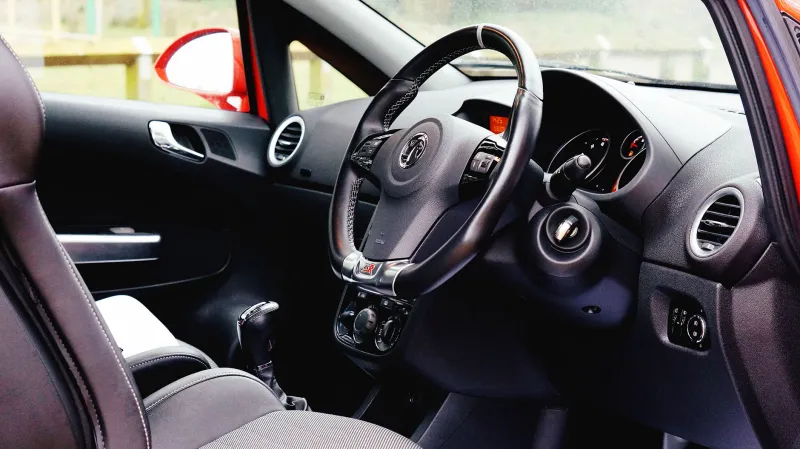
The placement of controls matters as much as their type. Infotainment systems that require a driver to reach across the centre console, or that bury temperature adjustment within a touchscreen menu, are poorly suited to drivers with limited reach or range of motion. When assessing a vehicle, it is worth spending time with the climate controls specifically—adjusting temperature, fan speed, and air distribution using only the hand or grip pattern available to you.
Emergency Egress: The Question Most Buyers Don't Ask
It is an uncomfortable subject, but the ability to exit a vehicle quickly in an emergency is a legitimate accessibility consideration. For disabled drivers, the standard assumption—that an occupant can open a door and step away from a vehicle unaided—does not always apply.
Vehicles with particularly heavy doors, those with electronic door releases that may fail following an electrical fault, or conversions in which the standard door mechanism has been modified, all warrant scrutiny. Emergency services in the UK are trained to assist disabled vehicle occupants, but response times vary, and a few minutes can matter significantly in certain scenarios.
When evaluating a converted vehicle in particular, it is worth asking the conversion specialist how the modification affects door operation, whether manual overrides are fitted, and whether the vehicle has been assessed for emergency exit routes. This is not a question that appears on any standard specification form, but it is one that any reputable supplier should be able to answer clearly.
Seating Position and Sightline Considerations
The height at which a driver sits relative to the road, the steering wheel, and the surrounding environment is another dimension of accessibility that standard specifications rarely address in useful terms. Drivers who use hand controls, for example, may find that a very low seating position places the steering wheel at an awkward angle for the adapted mechanism. Conversely, a raised seating position—common in SUVs and crossovers—can create challenges for drivers transferring from a low wheelchair.
Sightlines also carry practical weight. A high window line or thick A-pillar can create blind spots that are particularly problematic for drivers with limited neck mobility or who cannot turn easily to check over their shoulder. These are details that only become apparent during a genuine test drive, conducted under conditions that reflect actual use.
Making the Evaluation Work for You
The Motability Scheme offers access to a broad range of vehicles, and its advisers can provide guidance on models with specific features. However, the scheme's documentation, like most manufacturer literature, tends to focus on headline specifications rather than the granular details discussed here.
Before committing to any vehicle—whether through Motability or a private purchase—it is worth creating a personal checklist of the features that matter most to your specific circumstances. Bring that list to every test drive. Request demonstrations of boot loading, door operation, and climate controls in conditions that reflect your daily routine. If possible, consult with an occupational therapist who specialises in driving assessment; the NHS and a number of independent providers offer this service across the UK.
The wheelchair symbol on a vehicle's marketing material is a starting point, not a guarantee. The features that define genuine usability are smaller, more specific, and ultimately more important than any single badge or category. Knowing what to look for is the first step towards finding a vehicle that truly supports independent life.