Cold Months, Careful Preparation: How to Keep Your Accessible Vehicle Road-Ready Through a UK Winter

Winter in the United Kingdom rarely delivers the dramatic extremes seen in much of continental Europe, but it is consistently capable of creating serious problems for motorists—and for drivers of accessible vehicles, those problems arrive with additional layers of complexity. A ramp that functions flawlessly in October may behave unpredictably in January. A hoist battery that held its charge through the summer may struggle when temperatures drop. A carefully adjusted mirror system may become unreliable when frost and condensation enter the equation.
Preparing an accessible vehicle for winter is not simply a matter of fitting winter tyres and hoping for the best. It requires a methodical review of every adaptation on the vehicle, an honest assessment of the routes and conditions you regularly encounter, and a practical plan for when—not if—something does not go according to plan.
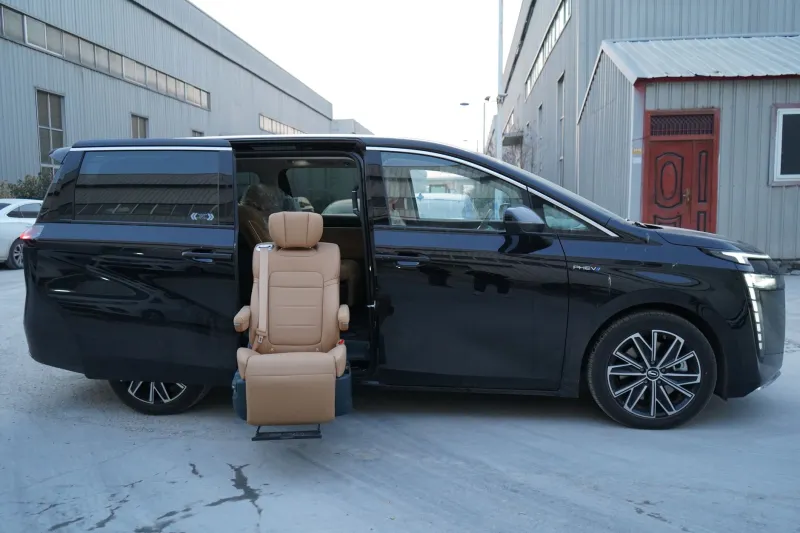
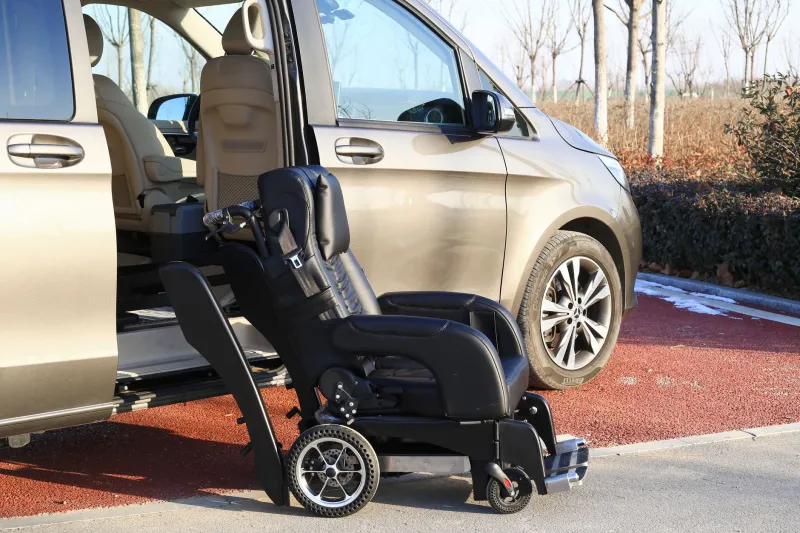
The Battery Issue: Electric Lifts and Hoists in Cold Conditions
Electric wheelchair hoists and platform lifts are among the most mechanically demanding components on any accessible vehicle, and they are also among the most sensitive to temperature. The batteries that power these systems—typically sealed lead-acid or, in more modern installations, lithium-based units—lose capacity in cold weather. This is not a fault; it is a chemical reality.
At temperatures below five degrees Celsius, a lead-acid battery may deliver as little as 70 to 80 per cent of its rated capacity. In severe cold, that figure can fall further. For a hoist that is already working near the upper end of its load rating, reduced battery capacity can manifest as slower operation, unexpected mid-cycle stops, or a failure to complete a full lift cycle.
The practical response is threefold. First, have the battery load-tested by a qualified technician before winter arrives—ideally in October. A battery that passes a standard voltage check but fails a load test is a liability waiting to materialise on a cold morning. Second, if the vehicle is garaged, prioritise doing so during cold spells; ambient temperature has a measurable effect on battery performance. Third, if the hoist begins to behave sluggishly, do not continue to operate it until the cause has been identified. A partially functioning lift is more dangerous than one that has stopped entirely.
Ramps, Ice, and the Driveway Problem
Manual and powered ramps present a distinct winter challenge that is easy to underestimate until you are facing it at seven in the morning. Ramp surfaces, regardless of their grip coating, can become hazardous when wet, icy, or covered in compacted snow. The incline that is perfectly manageable in dry conditions requires noticeably more effort—and offers less traction—when the surface is compromised.
For drivers and carers who assist wheelchair users on and off ramps, footwear matters more in winter than at any other time of year. Proper grip on the ramp surface is only half the equation; the person assisting also needs stable footing. This sounds obvious but is frequently overlooked in the rush of a morning routine.
For the ramp itself, consider applying a proprietary anti-slip treatment if one is not already present. Several products designed for outdoor decking are appropriate for aluminium ramp surfaces and can be reapplied seasonally. Keeping a small supply of fine grit or cat litter in the vehicle—stored in a sealed bag—provides an immediate solution if ice forms on the ramp surface before a journey.
The driveway or parking area immediately adjacent to the ramp deserves equal attention. Rock salt applied the night before a predicted frost can make a significant difference to the safety of the boarding and alighting process. Local authorities in most UK regions provide free or subsidised grit to residents on request; it is worth contacting your council to ask.
Adapted Mirror Systems and Winter Visibility
Many accessible vehicles are fitted with extended or modified mirror systems to compensate for altered sightlines resulting from raised roof sections, repositioned seating, or additional equipment. These systems work well in normal conditions but can be compromised in winter in ways that standard mirrors are not.
Extended mirror arms are more exposed to the elements and more susceptible to icing. Mirror heating elements, where fitted, should be tested before winter. Where they are not fitted, a proprietary mirror anti-frost product applied the evening before a cold night can prevent the frustrating—and potentially dangerous—situation of setting off with mirrors that are not yet clear.
Condensation on rear cameras and parking sensors is another winter-specific issue. These systems are increasingly common on accessible vehicles and are genuinely useful for drivers managing a larger, converted vehicle in tight spaces. Cold mornings can cause condensation to form on camera lenses, rendering them temporarily ineffective. Allow adequate time for the vehicle's heating and demisting systems to work before relying on these aids.
Regional Considerations: Scotland to the South Coast
The UK's geography means that winter conditions vary considerably between regions, and accessible vehicle owners should calibrate their preparation accordingly.
In Scotland, particularly in rural areas and at higher elevations, winter conditions can be severe and prolonged. Snow chains or winter tyres are a genuine consideration rather than an optional extra for accessible vehicle users who cannot afford to be stranded. The Scottish Government's Ready Scotland resource provides regional weather guidance that is worth monitoring through the winter months.
In northern England and Wales, conditions are less extreme but still capable of producing significant disruption. Ice on secondary roads—the type that accessible vehicle users often rely on for home-to-clinic or home-to-school journeys—can persist long after primary routes have been treated.
Along the South Coast and in the South East, the risk of severe winter conditions is lower, but the relative rarity of significant cold snaps means that local infrastructure—gritting regimes, road treatment schedules—may be less robust. A single sharp frost can create more disruption in a region unaccustomed to it than a prolonged cold spell in Scotland, where preparedness is simply part of the seasonal routine.
Building a Winter Emergency Kit for Accessible Vehicles
Every accessible vehicle should carry a winter emergency kit that accounts for the specific needs of its occupants. Standard items—torch, warm blanket, reflective triangle, phone charger—apply to any vehicle. But accessible vehicle users should also consider:
- A manual override tool or key for powered ramps and hoists, in case of electrical failure
- A compact snow brush long enough to clear the roof section of a raised-roof conversion
- A spare set of gloves for anyone assisting with the ramp or hoist in cold conditions
- Contact details for the vehicle converter's emergency support line, if one is available
- Medication and medical supplies sufficient for an extended delay
Breaking down in cold weather is unpleasant for any driver. For a disabled or elderly driver of an accessible vehicle, the consequences of being stranded without adequate preparation can be considerably more serious. A modest investment of time and a small amount of storage space can make a substantial difference.
A Final Word on Routine
The most effective winter preparation is not a single annual event but an adjustment to ongoing habits. Checking hoist battery performance, clearing ramp surfaces, and allowing extra time for the vehicle to warm up properly before departure are small changes to the daily routine that accumulate into a meaningfully safer winter. The cold months in the UK are finite—but the value of arriving safely at every destination is not.