Family Cars and the Accessibility Illusion: What Manufacturers Aren't Telling You
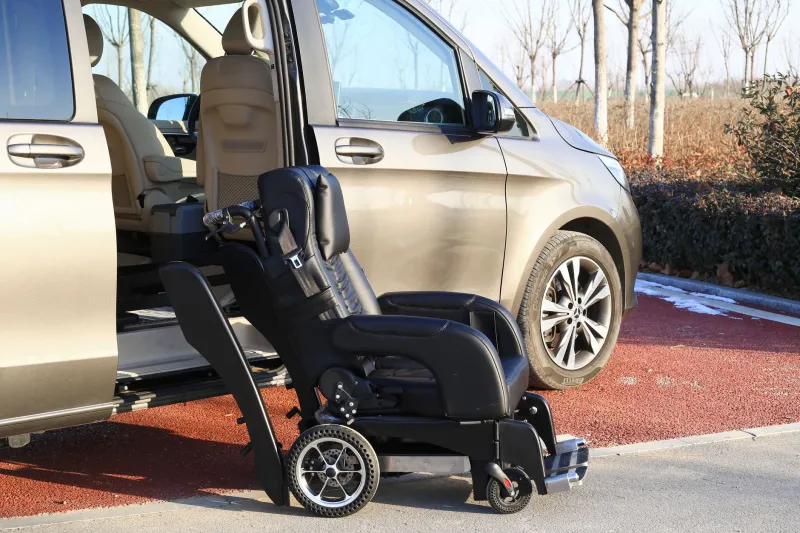
Britain's roads are filled with family saloons, crossovers, and MPVs that manufacturers promote as versatile, inclusive, and suitable for every passenger. Spacious interiors, wide-opening doors, and flexible seating configurations are among the most common selling points. Yet for the estimated 1.2 million wheelchair users in the UK, and the families who travel alongside them, these promises frequently dissolve the moment a wheelchair comes into the equation.
The question is not simply whether a vehicle can accommodate a folded wheelchair in its boot. The question is whether a vehicle genuinely supports dignified, independent, and practical travel for people with mobility impairments — and on that measure, the mainstream automotive market has a great deal of ground still to cover.
The Marketing Problem
Automotive branding is expert at projecting aspiration. Family car campaigns consistently feature active, multigenerational households loading camping gear, transporting pushchairs, and making effortless use of flexible rear seating. Accessibility, however, is almost never part of that narrative — unless the vehicle has been specifically adapted or positioned within a scheme such as Motability.
This absence matters. When accessibility is not a design priority from the outset, it becomes an afterthought addressed, if at all, through third-party conversion. The result is a market in which wheelchair users must rely on specialist converters to transform vehicles that were never genuinely designed with them in mind, often at significant cost and with considerable compromise to the original vehicle's integrity.
Several manufacturers have begun to use terms such as "accessible" or "inclusive" in their marketing materials, yet closer examination often reveals these claims relate to minor ergonomic considerations — lower load floors, wider door apertures, or adjustable seat heights — rather than the substantive structural accommodations that wheelchair users actually require.
What Real-World Usability Actually Demands
To understand where popular family cars succeed and fail, it is necessary to establish what wheelchair accessibility genuinely requires in practice. The key criteria are more demanding than many manufacturers appear to appreciate.
First, door aperture and sill height are critical. A vehicle with a wide door opening is of limited value if the sill is high enough to impede a lateral transfer from a wheelchair. Many SUVs and crossovers, despite their generous interior dimensions, present exactly this problem: their elevated ride height, while appealing to the broader market, creates a transfer height that is impractical without additional equipment.
Second, rear headroom and floor-to-ceiling height determine whether a passenger can remain seated in their wheelchair during travel — a requirement for power chair users and for those with conditions that make transfers unsafe or painful. Saloons and many hatchbacks are simply not designed to accommodate an occupied wheelchair, regardless of how their rear dimensions are described in specifications.
Third, ramp or lift compatibility is rarely considered during original vehicle design. The floor structure, rear door configuration, and approach angle all influence whether a conversion ramp or lift can be fitted without major structural modification. Some vehicles that appear suitable on paper prove problematic in practice once a conversion specialist assesses the chassis.
Where Popular Models Stand
Among the UK's best-selling family vehicles, the picture is mixed — and often counterintuitive.
Large MPVs, such as the Volkswagen Transporter Caravelle or the Renault Trafic Passenger, remain the most conversion-friendly options in the mainstream market. Their high rooflines, wide rear access, and relatively flat load floors make them natural candidates for wheelchair-accessible conversion. Several Motability-approved converters work extensively with these platforms, and the availability of tried-and-tested conversion solutions is considerably greater than for most passenger cars.
Compact MPVs and seven-seat crossovers, including models such as the Citroën Berlingo and Peugeot Rifter, occupy a more interesting position. These vehicles were designed with practicality as a core value, and their sliding rear doors, low load floors, and relatively upright rooflines make them genuinely more accessible than the average hatchback. Both models are available through Motability with wheelchair-accessible conversions, and user feedback within the disability community has generally been positive, particularly regarding ease of ramp deployment and interior space.
Mainstream hatchbacks and saloons — including many of the UK's top-selling models — present a more difficult picture. Vehicles such as the Ford Focus, Vauxhall Astra, and Volkswagen Golf are enormously popular, and their manufacturers invest significantly in promoting their versatility. However, their fixed roof heights, conventional door configurations, and boot-orientated load floors mean that wheelchair-accessible conversion is either impractical or requires compromises significant enough to undermine daily usability. These are not poor vehicles; they are simply vehicles designed without wheelchair access as a genuine consideration.
Large SUVs present a particular paradox. Models positioned at the premium end of the market — including various offerings from BMW, Mercedes-Benz, and Land Rover — are frequently marketed with reference to their spacious, adaptable interiors. In practice, their elevated sill heights and the structural constraints of their chassis make wheelchair-accessible conversion both costly and complex. The perception of space does not translate into practical accessibility.
The Conversion Industry's Burden
It is worth acknowledging that the UK's wheelchair-accessible vehicle conversion sector is skilled, innovative, and genuinely committed to improving outcomes for disabled drivers and passengers. Companies operating within this space routinely achieve remarkable results working with vehicle platforms that were never designed to support their work.
Nevertheless, the burden placed on converters — and ultimately on end users — by the absence of accessibility consideration at the manufacturer level is substantial. Conversion costs, which can range from several thousand pounds to well over £20,000 depending on the vehicle and the complexity of the modification, represent a significant financial imposition. The Motability Scheme provides crucial support in this regard, with a range of wheelchair-accessible vehicles available under the scheme, but the breadth of choice remains narrower than many users would wish.
What Needs to Change
The accessibility gap in the mainstream automotive market is not inevitable. It is a product of design priorities, and design priorities can be shifted.
Several manufacturers have begun to engage more seriously with disability organisations and accessibility consultants during the vehicle development process. This is a welcome development, but engagement at the consultation stage is meaningfully different from embedding accessibility as a core design requirement. The latter demands structural commitment — to floor heights, door configurations, roof profiles, and chassis designs that accommodate conversion without compromise.
For UK consumers navigating this landscape, the practical advice remains consistent: prioritise vehicles with established conversion programmes, seek independent assessments from qualified mobility specialists, and engage with the Motability Scheme's approved supplier network before committing to any vehicle. The scheme's advisers are well-placed to identify which current models offer the most viable accessibility solutions for individual needs.
The family car of the future should not require a wheelchair user to make concessions that other passengers would never accept. Until manufacturers treat accessibility as a first-order design value rather than an aftermarket consideration, the gap between promise and reality will persist — and the people who experience it most acutely will continue to bear the cost.