One Size Fits None: Why Accessible Vehicle Adaptations Must Be as Individual as the Driver

There is a well-intentioned assumption that runs through many conversations about accessible motoring: that accessibility is a binary quality, something a vehicle either has or lacks. In practice, the reality is far more nuanced. A vehicle meticulously adapted for one driver may be entirely unsuitable—or even hazardous—for another, despite both individuals having a recognised disability and both qualifying for similar funding support.
Understanding why requires a closer look at how different conditions translate into different driving needs, and why the phrase 'accessible vehicle' must always be understood as a starting point rather than a conclusion.
The Spectrum of Need Beneath a Single Label
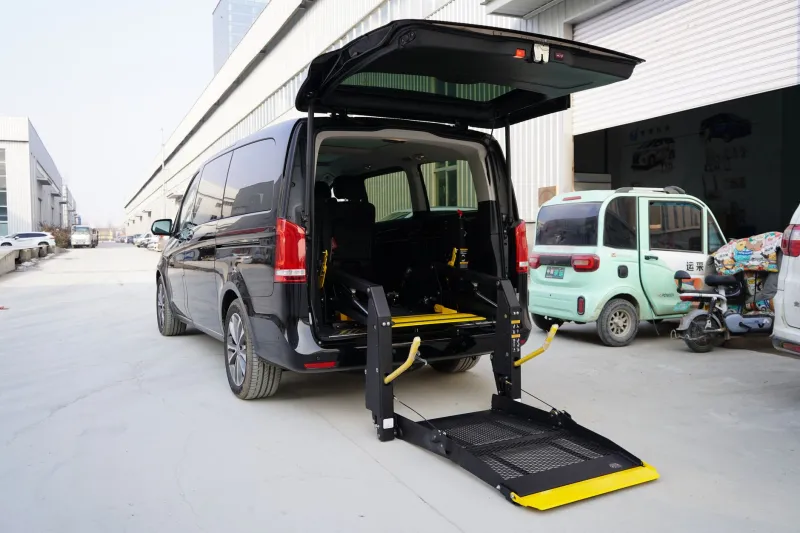
Consider two drivers, both wheelchair users, both eligible for the Motability Scheme. One is a full-time power wheelchair user with limited upper body strength; the other is a part-time manual wheelchair user with strong arms and good trunk stability. The first driver may require a drive-from-wheelchair setup, a joystick steering system, and a powered ramp with remote operation. The second may be perfectly well served by a vehicle they transfer into, with hand controls for acceleration and braking and a boot-mounted ramp for the chair.
These are not minor differences in preference. They are fundamentally different vehicles. Placing either driver in the other's car would not merely be uncomfortable—it could make independent driving impossible or unsafe.
This example involves two people who share a broad diagnostic category. When you extend the comparison across the full range of conditions that bring people to the accessible vehicle market—limb difference, neurological conditions, visual impairment, chronic pain, progressive conditions, and combinations thereof—the degree of individual variation becomes even more pronounced.
Limb Difference and Amputee Drivers: Precision Over Assumption
Drivers with limb difference or acquired amputation often encounter a frustrating assumption from less experienced dealers: that hand controls are the default solution. In some cases they are appropriate; in others, they are entirely the wrong approach.
A driver with a below-knee amputation on one side, for instance, may find that a simple left-foot accelerator pedal—or the removal of a redundant pedal—is all that is required. Fitting complex hand controls to such a vehicle adds cost, changes the driving experience unnecessarily, and may even introduce new difficulties.
Conversely, a driver with bilateral upper limb difference may require adaptations that go well beyond standard hand controls, potentially including specialist steering solutions, indicator and wiper extensions, and modified ignition systems. The crucial point is that neither scenario can be assumed from the outside. Assessment by a qualified driving rehabilitation specialist—such as those operating through the DVLA-recognised network of Driving Mobility centres across the UK—is the only reliable starting point.
Neurological Conditions: When Needs Change Over Time
For drivers living with progressive neurological conditions such as multiple sclerosis, motor neurone disease, or Parkinson's disease, accessible vehicle planning carries an additional dimension: the adaptations appropriate today may be insufficient within a few years.
This has real implications for vehicle purchasing decisions. A driver in the early stages of MS may currently need only minor adaptations, but investing in a vehicle and conversion that can be upgraded—rather than replaced—as needs evolve is a considerably more cost-effective approach over time.
The Motability Scheme's three-year lease cycle can be both an advantage and a constraint in this context. On one hand, it allows drivers to move to more comprehensively adapted vehicles as their condition progresses. On the other, it may mean that a vehicle chosen at the start of a lease is already underpowered in terms of its adaptations by the time renewal arrives. Discussing likely progression with both a medical professional and a Motability specialist at the outset is advisable.
Chronic Pain and Fatigue: The Invisible Adaptation Challenge
Drivers managing conditions such as fibromyalgia, chronic fatigue syndrome, or severe arthritis often face a particular challenge: their needs are not always visible, and the adaptations they require are less immediately obvious than a ramp or a hand control.
For these drivers, the details of cabin ergonomics can be as critical as any mechanical adaptation. Seat positioning, steering column adjustment range, the effort required to operate secondary controls, and the ease of entry and exit all contribute to whether a journey is manageable or exhausting. A vehicle that requires significant physical effort to board, adjust, and operate will deplete energy reserves before the journey has begun.
Among the adaptations that can make a meaningful difference for this group are: swivel seats that reduce the twisting motion required to enter; panoramic mirrors that minimise the need to turn the head; voice-activated secondary controls; and automatic transmission with a low-effort gear selector. None of these features are dramatic in isolation, but their combined effect on driver fatigue across a working week can be substantial.
Visually Impaired Drivers: A Frequently Misunderstood Category
It is worth clarifying a common misconception: not all visually impaired people are unable to drive. Many individuals with partial sight retain a valid driving licence and drive legally within the UK, provided their vision meets the DVLA's minimum standards. For this group, accessible vehicle adaptations may include enhanced mirror configurations, specific instrument panel lighting, and navigation systems with high-contrast displays.
However, for those whose vision falls below the legal driving threshold, the relevant vehicle adaptations shift entirely—from driving aids to passenger-focused accessibility. This might mean priority seating, ease of boarding, or the ability to travel in a powered wheelchair. The category of 'visually impaired vehicle user' therefore spans two entirely different sets of requirements, and conflating them leads to poor purchasing decisions.
Why Comparing Notes with Other Disabled Drivers Has Limits
Community knowledge is valuable, and the accessible motoring community in the UK is notably generous with advice and experience. Online forums, Motability user groups, and local disability organisations are rich sources of real-world insight that no manufacturer's brochure can replicate.
However, the advice of a fellow driver whose condition, physical dimensions, driving habits, and vehicle preferences differ from your own has clear limits. What works brilliantly for one person may be actively counterproductive for another. Recommendations from peers should be treated as a starting point for further investigation, not a substitute for individual assessment.
The Assessment Process: Where Genuine Accessibility Begins
The Driving Mobility network operates assessment centres across the UK where occupational therapists and driving rehabilitation specialists can evaluate an individual's needs and recommend specific adaptations. This service is available to anyone with a disability or medical condition that affects driving, and it provides the kind of personalised analysis that no dealer or online guide can replicate.
For those approaching the Motability Scheme, the assessment process can inform both vehicle choice and the selection of approved adaptors. Taking this step before visiting a dealership—rather than after—can prevent costly mismatches and ensure that the vehicle ultimately chosen genuinely serves the individual who will depend upon it.
Accessibility, properly understood, is not a feature. It is a relationship between a vehicle and a specific person. Getting that relationship right demands more than goodwill and a broadly suitable specification. It demands individual attention—and it is worth insisting upon.