Buying Used: A Rigorous Guide to Inspecting Second-Hand Wheelchair-Accessible Vehicles in the UK
The appeal of a used wheelchair-accessible vehicle is straightforward: the price gap between a new WAV conversion and a comparable used example can be substantial, and for buyers whose needs are well defined, a pre-owned vehicle can represent excellent value. The risks, however, are equally real—and they extend well beyond the considerations that apply to any second-hand car purchase.
Adapted equipment is subject to wear patterns that most buyers—and many sellers—do not fully understand. Ramp mechanisms accumulate cycles rather than simply miles. Lowered floors may have been exposed to water ingress. Hand controls may have been adjusted improperly or maintained inconsistently. Identifying these issues before purchase, rather than after, is the difference between a sound investment and a costly problem.
Understanding the Market: Specialist Dealers vs. Private Sales
Used WAVs reach the market through several routes, each carrying different levels of risk and transparency.
Specialist WAV dealers typically source vehicles from Motability returns, fleet operators, or direct trade-ins. Their stock has usually been inspected, serviced, and—in many cases—re-certificated by approved adaptors. Prices reflect this additional assurance. The UK has a number of reputable specialist dealers, many of whom are members of the British Healthcare Trades Association (BHTA) or affiliated with Motability Operations. Buying from a BHTA member provides access to a code of practice and a dispute resolution process.
General used car dealers occasionally stock WAVs, particularly ex-Motability vehicles that have passed through auction. Their ability to assess and represent adapted equipment accurately is variable. A general dealer may accurately describe the base vehicle while having limited knowledge of the conversion's condition or history.
Private sales offer the lowest prices and the least protection. A private seller is under no obligation to have the vehicle's adaptations inspected, and the 'buyer beware' principle applies fully. Private WAV sales are not inherently dishonest—many represent genuine transactions between individuals with specific needs—but they require the buyer to apply greater scrutiny.
Red Flags Before You Even View the Vehicle
A number of warning signs are visible before any physical inspection takes place.
- No service history for the adaptation: The base vehicle's service history is necessary but not sufficient. A WAV conversion should have its own maintenance record, particularly for ramp or lift mechanisms. If the seller cannot produce this, treat it as a significant concern.
- Vague descriptions of the conversion: Reputable adaptors provide documentation. If the listing cannot identify who performed the conversion, when, and to what standard, this suggests either poor record-keeping or a conversion that was not carried out by an approved specialist.
- Unusually low mileage combined with significant age: Low mileage on an older WAV does not necessarily indicate light use. Ramp and lift mechanisms are rated in cycles, not distance. A vehicle used primarily for short urban journeys may have accumulated thousands of ramp cycles despite modest mileage.
- Missing or expired LOLER certification: Passenger-carrying lifts in the UK are subject to the Lifting Operations and Lifting Equipment Regulations 1998 (LOLER). Any lift mechanism used to carry a person should have a current thorough examination certificate. Its absence is a serious red flag.
The Physical Inspection: A Structured Approach
Approach the inspection methodically. Do not allow enthusiasm for the vehicle to compress the time you spend on adapted components.
Ramp and Lift Mechanisms
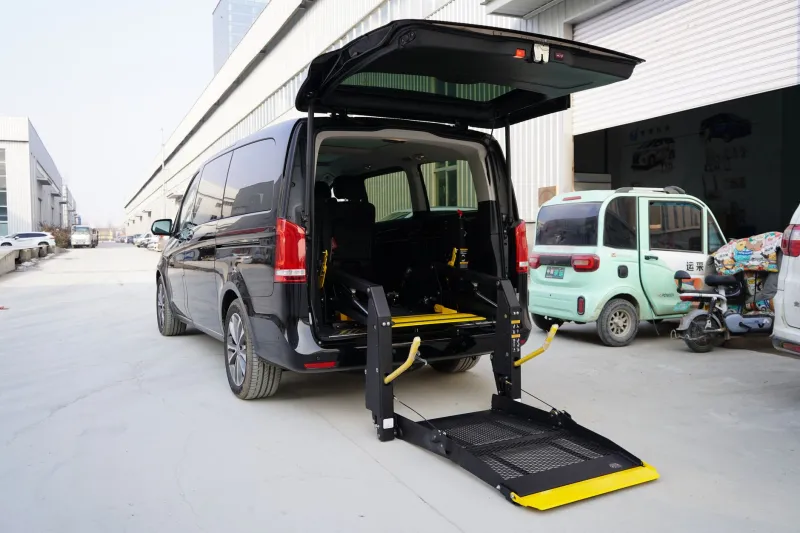
Operate the ramp or lift through its full cycle—deploy, use, and retract—at least three times. Listen for grinding, hesitation, or uneven movement. Check for:
- Corrosion along the ramp surface, particularly at fold points and along the underside where road salt accumulates
- Cracking or delamination of the anti-slip surface
- Smooth, consistent motor operation without surging or stalling
- Secure attachment points where the mechanism connects to the vehicle body
- The manual override function—confirm it operates correctly and that the relevant documentation is present
If the vehicle is fitted with a platform lift, inspect the platform surface for wear and the safety lip or barrier for damage. Confirm that the weight capacity is clearly marked and appropriate for your needs.
Floor Modifications and Structural Integrity
Vehicles with lowered floors are among the most complex conversions, and also among the most susceptible to water damage. Inspect the floor pan carefully for:
- Rust or surface corrosion, particularly along welded seams
- Damp or soft areas beneath any carpet or rubber covering
- Evidence of repair or filler in the structural floor area
- The condition of any underfloor sealing where the lowered section meets the original body
This inspection is best conducted with a torch and ideally with the vehicle on a ramp or inspection pit. If neither is available, a mirror on a stick can help assess the underside.
Hand Controls and Driving Aids
If the vehicle is fitted with hand controls, have them demonstrated by someone familiar with their operation, or—if you are a hand control user—operate them yourself. Assess:
- The smoothness and consistency of the push-pull or push-rock action
- Security of the mounting bracket—there should be no movement or flex in the attachment
- Condition of grip surfaces
- Whether the controls interfere with airbag deployment paths (this should have been assessed at installation, but it is worth confirming)
For electronic driving aids, request a demonstration of all functions and check for any warning indicators on the system's display.
Wheelchair Restraint Systems
If the vehicle is configured for a passenger to travel in their wheelchair, the restraint system is a safety-critical component. Check:
- The condition of all four tie-down straps, including the webbing for cuts, fraying, or UV degradation
- The operation of the seatbelt retractor and buckle
- The condition of the headrest and backrest if a separate passenger seat is fitted
- Whether the system carries current certification appropriate for the type of wheelchair it is designed to secure
Warranty and Modification Implications
This is an area where many buyers are caught off guard. The base vehicle's remaining manufacturer warranty may be unaffected by a conversion carried out by an approved adaptor—but it may also be partially or fully voided if the conversion interfered with warranted components. Request written clarification from the seller or the original adaptor.
For conversions carried out by BHTA members or Motability-approved adaptors, the adaptation itself will typically carry a separate warranty. Confirm whether any portion of this warranty is transferable to a new owner and, if so, what the process for registration involves.
Getting an Independent Assessment
For any significant purchase, commissioning an independent inspection by a WAV specialist—rather than a standard vehicle inspection service—is money well spent. A specialist will be able to assess the adapted components against the relevant standards and identify issues that a general mechanic would not recognise.
Driving Mobility centres can also advise on whether a specific vehicle's adaptations are appropriate for your needs, which is a separate but equally important question from whether those adaptations are in good condition.
A Final Word on Patience
The used WAV market is smaller and slower-moving than the general second-hand car market. Vehicles that precisely match a buyer's requirements do not appear frequently, and the temptation to compromise—or to overlook concerns in order to secure a suitable vehicle—is understandable. Resist it where safety-critical components are involved. The cost of a failed ramp mechanism or an uncertified restraint system is measured not only in repair bills but in the loss of the independence that the vehicle was purchased to provide.