Exploring the Range: Wheelchair-Accessible Vehicles and Mobility Products Available in the UK
For disabled and elderly drivers — and for families and carers who support them — the search for the right vehicle or mobility product is rarely straightforward. The UK market offers a broad and sometimes bewildering array of options, from factory-adapted people carriers to bespoke conversion vans, hand controls, and hoisting systems. This guide brings the principal categories together in one place, so that you can approach your search with confidence.
Wheelchair-Accessible Vehicles (WAVs)
At the heart of the accessible motoring market sits the wheelchair-accessible vehicle, commonly abbreviated to WAV. These are vehicles that have been purpose-built or professionally converted to accommodate a wheelchair user either as a passenger or, in some configurations, as the driver.
WAVs are broadly divided into two groups:
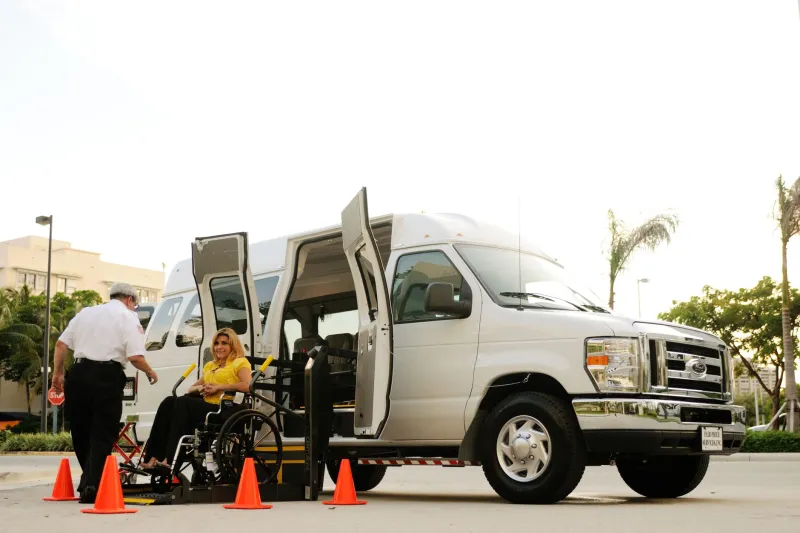
Passenger WAVs are configured so that the wheelchair user travels in the rear or side of the vehicle whilst remaining seated in their wheelchair. A ramp or lift provides entry, and the chair is secured to the floor using approved tie-down systems. Popular base vehicles in this category include the Volkswagen Caddy, Ford Tourneo Connect, Peugeot Rifter, and Citroën Berlingo — all of which are commonly converted by specialist coachbuilders.
Driver WAVs are adapted so that the wheelchair user can transfer to the driver's seat and operate the vehicle using hand controls, joystick steering, or other assistive technology. These are more complex conversions and typically require an assessment by a qualified driving rehabilitation specialist before installation.
Conversion Types and Bodywork Modifications
The method by which a vehicle is converted significantly affects its practicality, cost, and suitability for a given individual. The main conversion approaches include:
- Lowered-floor conversions: The vehicle floor is lowered — often by several inches — to create sufficient headroom for a wheelchair user to remain seated in comfort. This is the most common approach for MPV-style vehicles.
- Raised-roof conversions: Rather than lowering the floor, the roof is raised to increase internal height. This approach is more often seen on larger vans or minibuses.
- Rear-entry conversions: The vehicle is accessed via a ramp or lift at the rear, typically operated electrically. This configuration suits many family cars and MPVs.
- Side-entry conversions: Access is provided through a widened side door, which can be more convenient in car parks and urban settings where rear access may be obstructed.
Reputable UK converters include Allied Vehicles, Brotherwood, Gowrings Mobility, and Waveco, among others. It is always advisable to verify that any conversion meets current British and European safety standards.
Driving Aids and Vehicle Adaptations
Beyond the vehicle itself, a wide range of driving aids can be fitted to standard or adapted vehicles to enable independent driving for people with limited mobility:
- Hand controls: Mechanical or electronic systems that transfer acceleration and braking functions from foot pedals to hand-operated levers or push-pull mechanisms.
- Steering aids: Spinner knobs, tri-pins, and joystick steering systems assist drivers who have reduced grip or arm strength.
- Electronic accelerator rings: Fitted around the steering column, these allow acceleration without the need to operate a foot pedal.
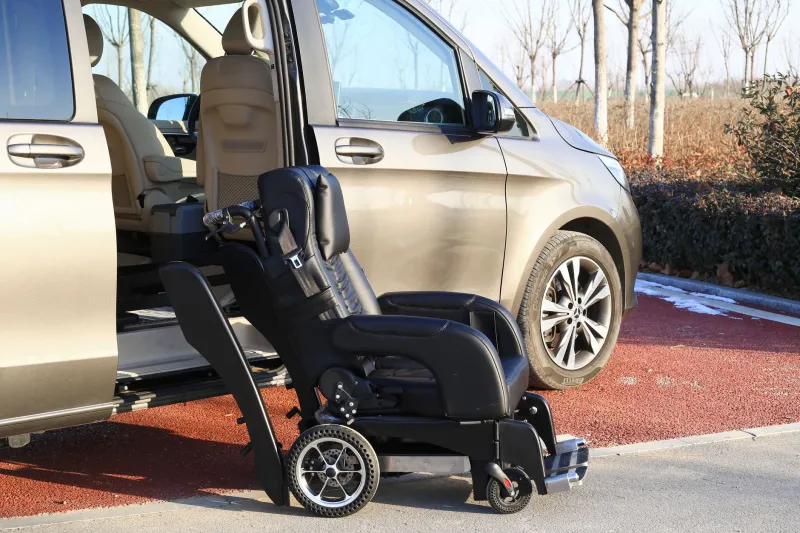
- Transfer aids: Swivel seats, sliding seat bases, and roof-mounted hoists assist drivers and passengers who can transfer out of their wheelchair into a standard vehicle seat.
- Pedal guards and extensions: Simple modifications to prevent accidental pedal activation or to bring pedals within comfortable reach.
Any adaptation that affects the vehicle's controls must be assessed by an approved driving rehabilitation specialist, and the DVLA must be notified of relevant changes to a driver's condition or vehicle setup.
Passenger Lifting and Hoisting Equipment
For passengers who cannot use a ramp independently, vehicle-mounted hoists and lifts offer an alternative. These range from compact, fold-away ramps to fully automated platform lifts capable of raising a powered wheelchair or scooter. Key considerations when selecting lifting equipment include the weight capacity of the device, the kerb weight of the vehicle, and the available ground clearance.
Scooter and Wheelchair Carriers
Not all users require a full WAV conversion. Many people who can transfer to a standard car seat still need a means of transporting their manual wheelchair, powered wheelchair, or mobility scooter. Products in this category include:
- Boot hoists: Electrically operated devices that lift and stow a folded wheelchair into the boot of a saloon or hatchback.
- Rooftop carriers: Aerodynamic boxes or cradles mounted to a roof rack, suitable for lighter manual chairs.
- Tow-bar-mounted carriers: Platforms that attach to a standard tow bar and carry a scooter or powered chair behind the vehicle.
Sourcing Products Through the Motability Scheme
Many of the products described above are available through the Motability Scheme, which enables eligible recipients of qualifying disability benefits to lease an adapted vehicle using their mobility allowance. The scheme covers a broad selection of WAVs, and Motability Operations works with approved converters and adaptation specialists to ensure that vehicles are properly fitted and certified.
Advance payments, where applicable, may be partially or wholly offset by grants from Motability's own charitable fund for those with higher adaptation costs. It is worth discussing your specific requirements with a Motability-approved dealer early in the process, as lead times for converted vehicles can be considerable.
VAT Relief on Mobility Products
In the United Kingdom, disabled people are entitled to purchase qualifying vehicles, adaptations, and mobility aids free of VAT, provided they meet the eligibility criteria set out by HM Revenue & Customs. This relief applies to WAVs, driving adaptations, and a range of ancillary equipment. Suppliers will typically ask you to complete a VAT exemption declaration at the point of purchase.
Making an Informed Choice
The right product will always depend on individual circumstances — the nature and degree of a person's disability, their lifestyle, their budget, and whether they intend to drive or travel as a passenger. A thorough assessment by an occupational therapist or driving rehabilitation specialist is strongly recommended before committing to any significant purchase or adaptation.
WheelAir is committed to providing clear, impartial information to help you navigate every stage of that decision. Whether you are comparing WAV conversions, researching hand controls, or exploring what the Motability Scheme can offer, our editorial coverage is designed to support you with honest, practical guidance tailored to the UK market.