Green Miles: Navigating the Environmental Impact of Accessible Vehicles and the Rise of Electric Alternatives
The United Kingdom's commitment to achieving net zero carbon emissions by 2050 has reshaped conversations across almost every sector of society. Transport, which accounts for approximately 26 per cent of UK greenhouse gas emissions according to the Department for Energy Security and Net Zero, sits near the top of the agenda. Within that broader conversation, however, one group of road users has received remarkably little attention: disabled drivers and passengers who rely on modified, wheelchair-accessible vehicles.
This is not a peripheral concern. There are approximately 165,000 vehicles on the Motability Scheme at any given time, the vast majority of which are either purpose-built accessible vehicles or standard vehicles with significant adaptations. Each of these vehicles carries a carbon footprint that is, by its very nature, heavier than the equivalent standard model. Understanding why — and what can be done about it — is essential for any honest discussion of sustainable transport in Britain.
Why Modified Vehicles Consume More
The physics are straightforward. Weight is the primary enemy of fuel efficiency, and accessible vehicle conversions add weight in several significant ways.
A rear-entry wheelchair ramp system, depending on its design, can add between 30 and 80 kilograms to a vehicle's kerb weight. A full hydraulic or electro-hydraulic lift mechanism — the kind typically fitted to larger accessible minibuses or vans — may add considerably more. Reinforced floor structures, modified seating systems, wheelchair tie-down assemblies, and raised rooflines all contribute additional mass. A vehicle that leaves a manufacturer's production line weighing 1,500 kilograms may well exceed 1,700 kilograms after a comprehensive wheelchair-access conversion.
For petrol and diesel vehicles, this additional weight translates directly into increased fuel consumption. Research published by the European Automobile Manufacturers' Association has consistently demonstrated that every 100 kilograms of additional vehicle weight increases fuel consumption by approximately 0.3 to 0.5 litres per 100 kilometres under typical driving conditions. Over a year of regular use, this difference accumulates into a meaningful increase in both fuel expenditure and carbon output.
There is also the aerodynamic dimension. Raised rooflines, a feature of many accessible conversions of the Volkswagen Transporter, Ford Tourneo Custom, and similar vehicles, increase drag coefficients and further reduce fuel efficiency, particularly at motorway speeds.
The Carbon Arithmetic
To put this in concrete terms: a standard Peugeot Rifter with a 1.5-litre diesel engine emits approximately 110 grams of CO₂ per kilometre in official testing. A wheelchair-accessible conversion of the same vehicle, accounting for additional weight and aerodynamic changes, may emit between 125 and 145 grams per kilometre under real-world conditions. For a driver covering 10,000 miles annually — not unusual for someone who relies on their vehicle for both medical appointments and daily life — this represents an additional 240 to 560 kilograms of CO₂ per year compared to a non-disabled driver in an equivalent car.
This is not a trivial figure. It is also not a figure that disabled drivers should be made to feel guilty about. The need for independent mobility is not a lifestyle choice; it is a fundamental component of dignity, participation, and quality of life. The responsibility for addressing this carbon gap lies primarily with manufacturers and policymakers, not with individuals who have no practical alternative.
Electric Accessible Vehicles: Promise and Reality
The most significant development in sustainable accessible motoring is the emergence of electric vehicles (EVs) that are either purpose-built for wheelchair access or available in conversion-ready formats. The environmental calculus for electric accessible vehicles is considerably more favourable, even accounting for the additional weight of conversion components.
Electric motors produce zero direct tailpipe emissions, and the carbon intensity of electricity generation in the UK has fallen dramatically over the past decade, with renewables now accounting for a growing proportion of the national grid. Even a heavier, converted electric vehicle will, over its operational lifetime, produce substantially fewer greenhouse gas emissions than a comparable diesel model.
Several vehicles currently available in the UK market merit attention in this context:
- The Volkswagen ID. Buzz has attracted significant interest from the accessible vehicle conversion industry. Its flat-floor architecture, generous interior dimensions, and electric powertrain make it a natural candidate for wheelchair-access conversion, and several UK-based converters are actively developing compliant versions.
- The Renault Kangoo E-Tech Electric is already available in accessible conversion formats through specialist converters, offering a practical range of approximately 165 miles — sufficient for most daily journeys — with the environmental benefits of full electrification.
- The Ford E-Transit Custom, anticipated in accessible conversion variants, represents another promising development for those requiring larger, van-based accessible transport.
The Motability Scheme has expanded its EV offerings in recent years, and the Scheme's charity arm has invested in research to better understand the needs of disabled drivers transitioning to electric vehicles. Range anxiety, charging infrastructure accessibility, and the physical demands of using public charging points remain genuine concerns for many disabled users.
Charging Infrastructure: An Accessibility Problem Within an Environmental Problem
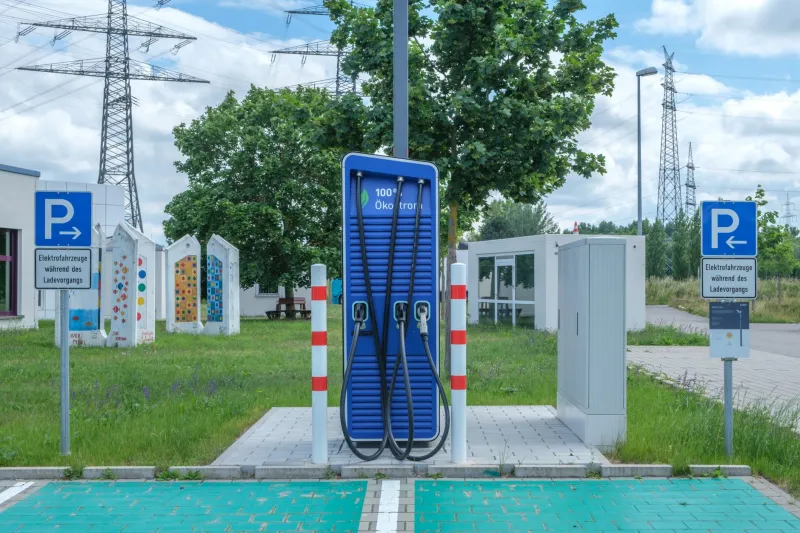
One dimension of the EV transition that is rarely discussed in environmental coverage is the accessibility of public charging infrastructure. Many public charge points in the UK are poorly positioned, require significant manual dexterity to operate, and are located in car parks that present their own accessibility challenges.
Chargeplace Scotland and Osprey Charging have made some progress in designing more accessible charge point installations, but the national picture remains inconsistent. For a disabled driver who cannot easily leave their vehicle to operate a standard charge point, the practical barriers to EV adoption can be substantial.
This is an area where policy intervention is urgently required. The Public Charge Point Regulations 2023 introduced minimum standards for new charge point installations, but accessibility requirements remain insufficiently specific. Campaign groups including Driving Mobility and Disability Rights UK have called for mandatory accessibility standards that reflect the full range of disabled drivers' needs.
Making Sustainable Choices Without Compromising Independence
For disabled drivers who wish to reduce their environmental impact within the constraints of their current situation, a number of practical measures are available:
- Journey consolidation: Combining multiple errands or appointments into single journeys reduces total mileage and associated emissions.
- Eco-driving techniques: Smooth acceleration, maintaining steady speeds, and anticipating braking can reduce fuel consumption by 10 to 15 per cent in conventional vehicles.
- Tyre pressure maintenance: Under-inflated tyres increase rolling resistance and fuel consumption; this is particularly relevant for heavier converted vehicles.
- Considering hybrid options: Several hybrid vehicles, including the Toyota Proace City Verso and variants of the Citroën Berlingo, are available in accessible conversion formats and offer meaningful fuel savings over purely combustion-engined equivalents.
The tension between environmental responsibility and the right to independent mobility is real, but it need not be irresolvable. The accessible vehicle industry, supported by progressive policy and genuine investment in electric conversion technology, has the means to deliver greener solutions. The question is whether the urgency matches the scale of the opportunity.